Insights
Can Ghana Leapfrog Healthcare? Insights from Zipline Ghana

Alliance for Healthtech
Alliance Admin
As Ghana continues to expand its foundational infrastructure—including reliable electricity for all—the nation faces a critical opportunity: to integrate 21st-century general-purpose technologies directly into its national architecture to leapfrog entire systems.
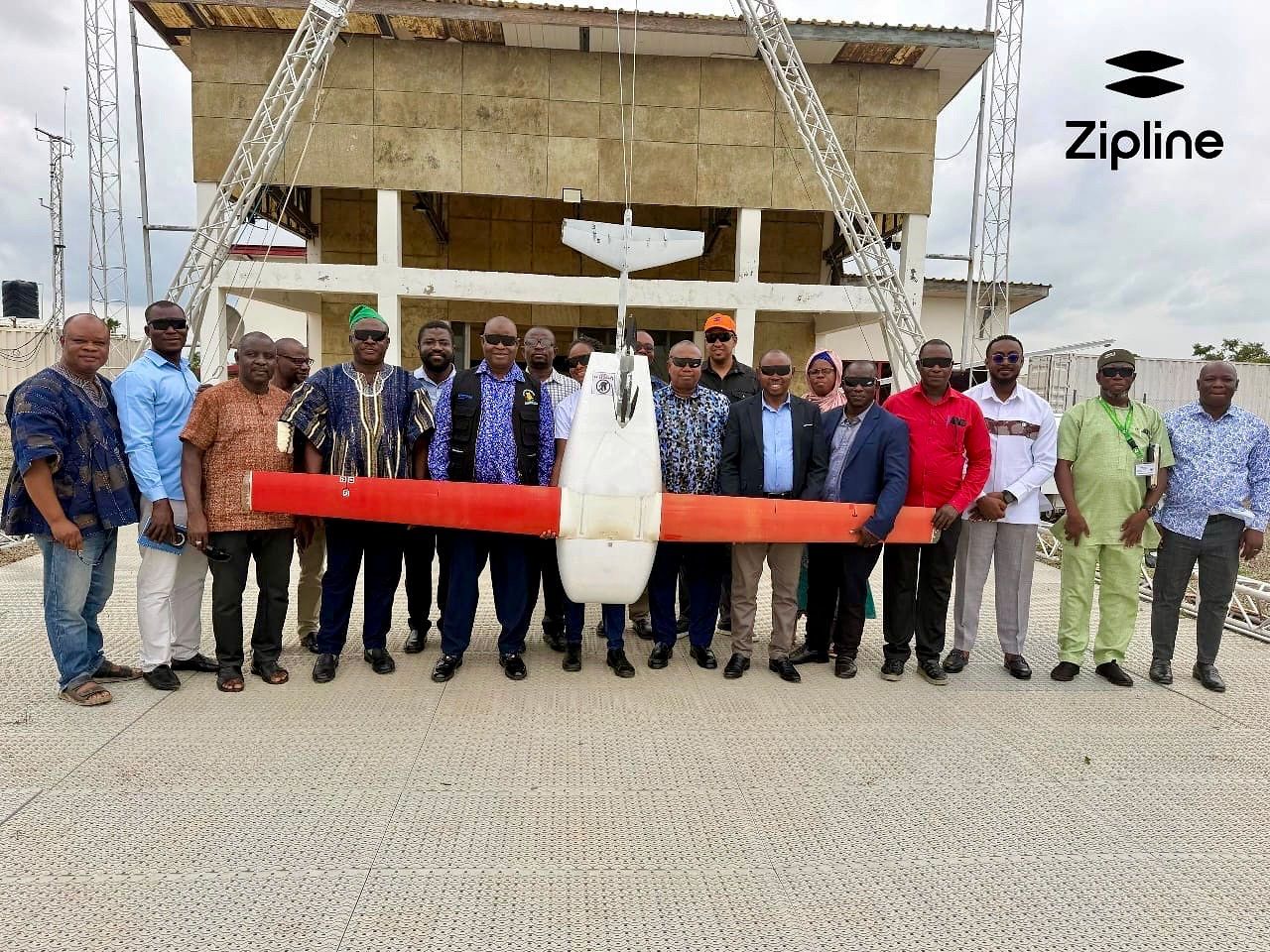
This imperative was at the forefront on July 28, when Zipline Ghana welcomed 21 health leaders from the Northern, North East, and Upper East Regions to its GH-3 distribution center in Vobsi.
Zipline’s vision in Ghana is going beyond logistics to provide technology and services for vital national infrastructure to simultaneously strengthen the healthcare system and serves as a powerful engine for rural development.
Building on Collaborative Foundations
This infrastructure will be realized through a collaborative framework involving the Government of Ghana, the Ghana Civil Aviation Authority, the Ghana Air Force, the Ministry of Health, the Ghana Health Service, the National Blood Service Ghana, Innovators and other key stakeholders.
By embedding autonomous logistics into the national grid, Zipline is uniquely positioned to support comprehensive three-layer healthcare vision:
Free Primary Healthcare: Bringing an additional 11 million Ghanaians into formal care.
National Health Insurance Scheme (NHIS): Supporting seamless referrals for higher-level care.
Ghana Medical Trust Fund: Facilitating advanced cancer, renal, and other specialized care services.
Underpinning these layers, Zipline's logistics network helps financial access translate into genuine physical access to medicines, vaccines, blood, and specialized products.
Technologies like this enable a fundamental shift from traditional, bulk, forecast-based push distribution to an agile pull system. Facilities can now order precisely what they need, exactly when they need it, drastically reducing wastage and stockouts while improving health outcomes across the board.
Maternal Health: In the Ashanti Region, facilities served by Zipline were associated with a 56.4% relative reduction in maternal deaths.
Immunization: In the Western North Region, the infrastructure enabled thousands more children to become fully immunized.
Aligning with National Development Goals
Beyond healthcare delivery, autonomous logistics can actively support key national development frameworks, including the 24-Hour Economy & Accelerated Export Development (24H+), the flagship Volta Economic Corridor (VEC), and the Accra Reset.
24H+: Autonomous logistics enable round-the-clock healthcare, high-skilled employment, and the reliable movement of essential products far beyond major urban centers. As the sector considers night operations, the question becomes clear: would the health sector rather dispatch a multi-tonne, human-driven ambulance along dark, challenging roads to deliver blood, or deploy an autonomous aircraft directly to the health facility? (Notably, Ghana's road-injury mortality increased by an estimated 48.5% between 2010 and 2023.)
Volta Economic Corridor (VEC): The technology complements agriculture, manufacturing, transport, and trade by connecting remote production centers and communities to on-demand logistics.
Accra Reset: Autonomous systems help consolidate fragmented government delivery frameworks, strengthen domestic health financing, and establish a reliable route to market for locally manufactured medicines and vaccines.
Achieving a leap in national healthcare and rural development requires cross-sector collaboration. Zipline remains committed to engaging widely across the ecosystem.