Insights
Africa’s Hospitals of the Future: Reimagining African Healthcare & Wellness.

Alliance for Healthtech
Alliance Admin

Imagine a healthcare landscape across Africa where geographical barriers crumble, diseases are predicted and preempted, and personalized care is not a luxury but a standard. This is the promise of the hospital of the future — a dynamic ecosystem powered by innovation, collaboration, and a deep understanding of the continent’s unique challenges and opportunities.
The traditional image of a hospital — often burdened by long queues, limited resources, and geographical inaccessibility — is ripe for transformation. The hospital of the future in Africa will be characterized by several key features:
Decentralization and Accessibility: healthcare will extend beyond the physical walls of a brick and mortar structure. Remote consultations, diagnostics, and monitoring will become commonplace, reaching underserved communities in even the most remote areas.
Data-Driven and Predictive Care: Artificial intelligence (AI) and big data analytics will revolutionize disease management. By analyzing patient data, identifying trends, and predicting outbreaks, healthcare professionals can intervene proactively, leading to earlier diagnoses and more effective treatments.
Personalized and Precision Medicine: Improved efficacy and reduced side effects due to advances in genomics and biotechnology, which will pave the way for tailored treatments based on an individual’s genetic makeup and specific disease profile.
Efficient and Streamlined Operations: Digitalization will optimize hospital workflows, from appointment scheduling and electronic health records to supply chain management. This will reduce administrative burdens, minimize errors, and improve the overall patient experience.
Focus on Preventative Care and Wellness: The hospital of the future will not just treat illness but actively promote wellness. Through digital health platforms and community outreach programs, individuals will be empowered to take proactive steps towards maintaining their health.
Several pioneering African tech startups are already laying the foundation for this transformative future, each playing a vital role; Yemaachi Biotech will help tailor treatments for diseases like cancer and infectious diseases, leading to better patient outcomes. Mino Health AI Labs will be instrumental in using their AI systems to analyze medical images, identify disease patterns, and predict potential health risks, enabling earlier interventions, improve patient management and assist healthcare professionals in making more informed decisions. mPharma will ensure patients have timely access to the medications they need, reducing costs and improving adherence. DrDoGood Health will provide virtual consultations, specialist referrals, and follow-up care, especially in areas with limited access to physical healthcare facilities, decentralizing care and making it more convenient and affordable. Rivia Co will streamline operations, improve communication between healthcare facilities, and provide valuable insights for better patient care and resource allocation. Zipline will deliver needed blood, medications, vaccines, PPE’s and other medical supplies with their autonomous drones across the continent.
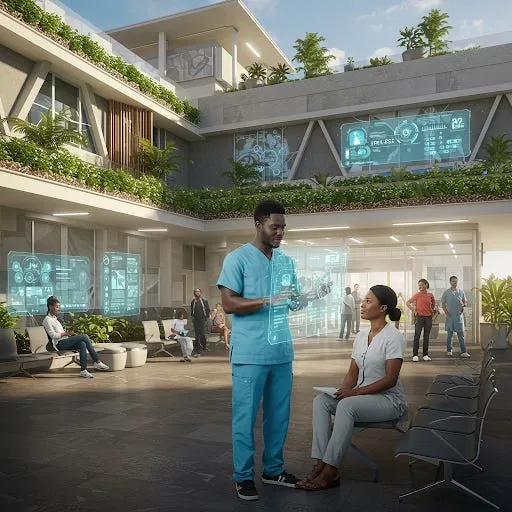
AI Generated image illustrating the African hospitals of the future
While these businesses are driving innovation from the ground up, the role of African governments is paramount in realizing the full potential of the hospital of the future and ensuring equitable access for all citizens. Key governmental responsibilities include:
Policy and Regulation: Governments must create supportive regulatory frameworks that encourage innovation and the adoption of digital health technologies while ensuring patient safety and data privacy. This includes establishing clear guidelines for telemedicine, AI in healthcare, and the use of electronic health records.
Infrastructure Development: Investing in robust digital infrastructure, including reliable internet connectivity and power supply, is essential for the successful implementation of remote healthcare services and digital health solutions, particularly in rural and underserved areas.
Funding and Investment: Governments need to allocate sufficient resources to support research and development in health technology, incentivize private sector investment in healthcare innovation, and ensure that these advancements are accessible to all segments of the population.
Capacity Building and Training: Equipping healthcare professionals with the skills to utilize new technologies and embrace digital health practices is crucial. Governments should invest in training programs and integrate digital health into medical and nursing curricula.
Promoting Collaboration and Partnerships: Governments can foster collaboration between the public and private sectors, as well as with international organizations, to leverage expertise, share best practices, and accelerate the adoption of innovative healthcare solutions.
Ensuring Universal Health Coverage: The ultimate goal is to ensure that the benefits of the hospital of the future reach every African citizen. Governments must work towards universal health coverage schemes that integrate these technological advancements to improve access, affordability, and quality of care for all.
The hospital of the future for Africa is not just about technological advancements; it’s about creating a more equitable, efficient, and patient-centered healthcare system. By embracing innovation, fostering collaboration between businesses and governments, and prioritizing the needs of the people, Africa can leapfrog traditional healthcare models and build a future where quality healthcare is a reality for everyone, regardless of their location or socioeconomic status. The journey has begun, and the potential for transformation is immense.